
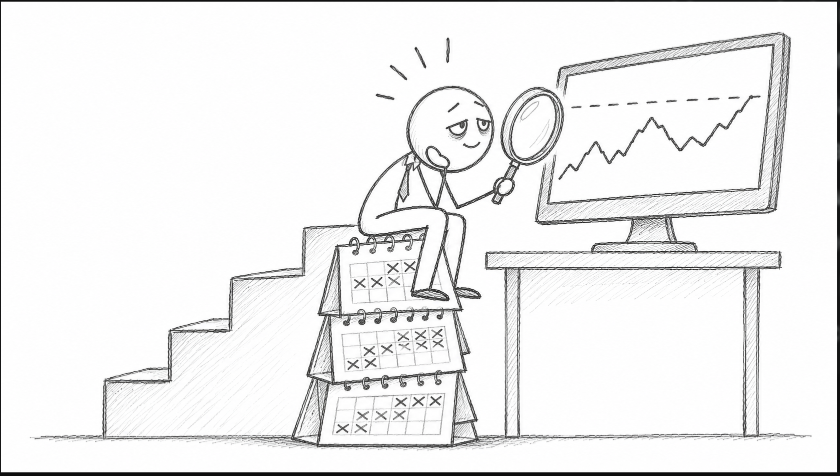
Ждать, пока A/B‑тест прокрасится, — плохая идея. Объясняю на цифрах
- Words
- 79
- Chars
- 486
- AI summary
- Yes
A feature is rolled out in stages—5%, 25%, 50%, then 100%—and then the report is checked every day until the metric looks significant. The article argues this is a bad idea: the false-positive rate can rise from 5% to 30–40%, and tests with p = 0.07 can end up appearing significant in half of cases even when there is no real effect. It explains why this happens and discusses statistical boundaries for checking an A/B test repeatedly without fooling yourself.
Фичу раскатывают 5% → 25% → 50% → 100%, а потом каждый день открывают отчёт и ждут, пока метрика «прокрасится». Выглядит безобидно, но при таком подходе ошибка первого рода растёт с 5% до 30–40%, а тесты с p = 0.07 «дожидаются» значимости в половине случаев даже без всякого эффекта. Разбираем, почему так происходит, и как смотреть в A/B‑тест сколько угодно раз и не обманывать себя: границы O’Brien‑Fleming, alpha‑spending и mSPRT. С формулами, цифрами и кодом на Python. Читать далее
Open article