
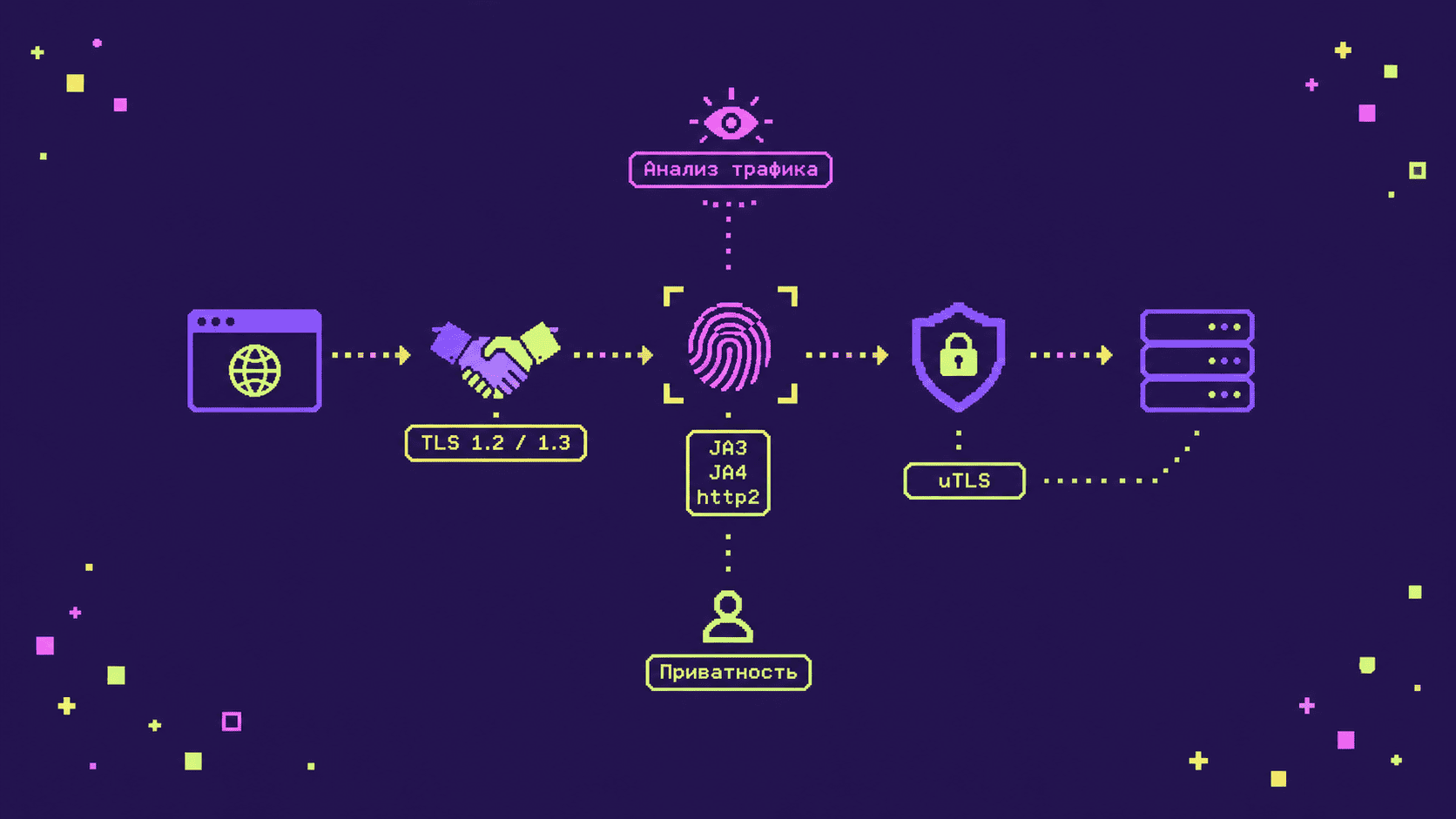
TLS наизнанку: от рукопожатия TLS 1.2/1.3 до Fingerprinting (JA3/JA4/http2) и маскировки с uTLS
The article explains how a WAF can tell a Python script apart from a real Chrome browser even when the headers are identical: the answer is embedded in the network stack. The supported ciphers and the order of TLS extensions form a unique fingerprint that cannot be hidden by simply swapping a proxy. It walks step by step through the anatomy of the TLS handshake, the JA3/JA4 deanonymization algorithms, and how to build the right digital signature using uTLS.
Как WAF отличает ваш скрипт на Python от реального Chrome, если заголовки полностью идентичны? Ответ зашит в сетевом стеке. Поддерживаемые шифры и порядок расширений TLS формируют уникальный отпечаток, который невозможно скрыть обычной подменой прокси. Пошагово разбираем анатомию TLS-handshake, алгоритмы деанонимизации JA3/JA4 и учимся собирать правильный цифровой почерк с помощью uTLS. Читать далее